 by
by By Lucas Gregory
In October 2023, Rio Hondo ISD teachers and students transformed the grass area near the student drop-off zone at Rio Hondo Middle School. Using best management practices (BMPs), they turned the unused space into a native landscape that now provides beneficial habitat for various bird and insect species, as well as provide onsite stormwater filtration that ultimately benefits the Arroyo Colorado.
From 24 different science classes, 445 students in grades 5-8 planted 1,500 native plants. Now that many of the plants are established, this space is being further developed as an outdoor classroom for the school’s science classes. The Rio Grande Valley chapter of the Native Plant Society of Texas (NPSOT) has begun working to assist with landscape maintenance and will be training teachers and students on proper care and maintenance of the native landscape. They also helped develop plant identification signs that will be installed later this fall to support student learning. A sign that describes how this site helps manage stormwater quantity and quality will also be installed.
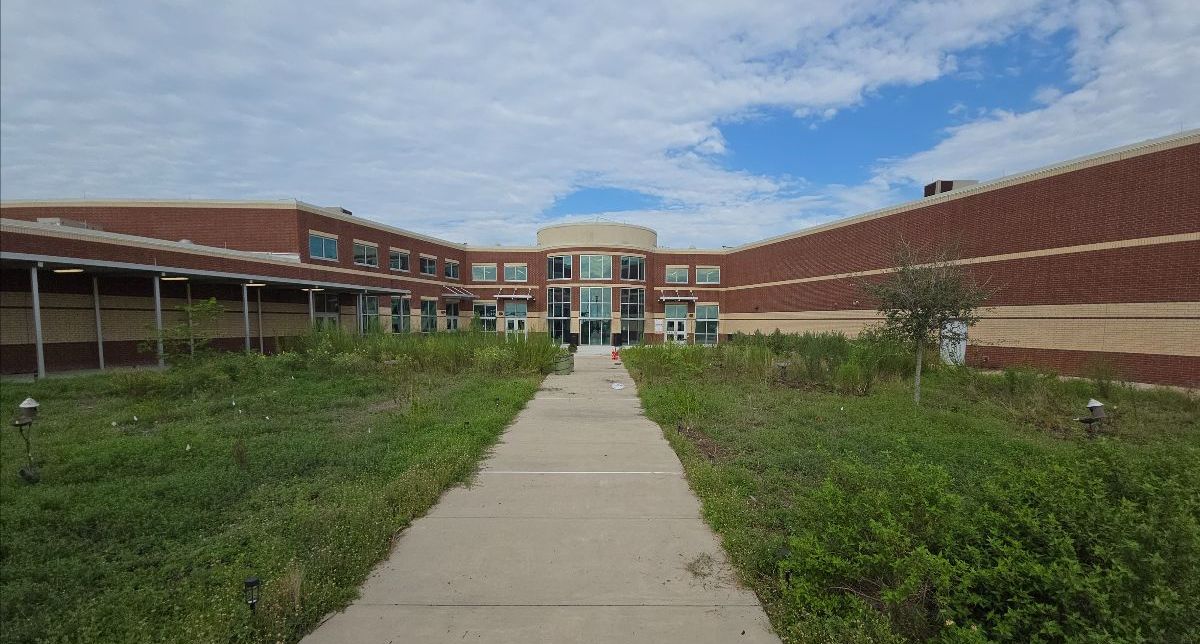
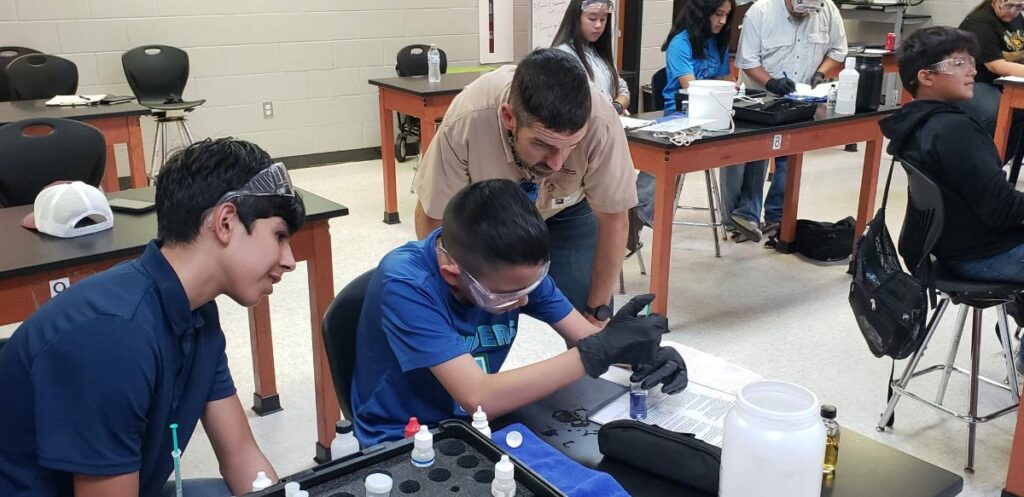
Photo by Allen Williams with Education Service Center 1.
Over the summer, science curricula were developed and tailored to each grade-level to cover a broad range of environmental concepts and enable teachers to incorporate the use of the native landscape/stormwater management space on campus into their classes. Content covers topics that are aligned with Texas Essential Knowledge and Skills requirements, and ties classroom lessons and experiments directly to the outdoor space. Curricula content covers specific water-focused topics such as water quality and pollution awareness, stormwater and runoff, nonpoint source pollution, watersheds, human impacts on water quality, water filtration and stormwater best management practices. Other complementary topics include energy flow and matter cycling, food chains and webs, soil science and chemistry, roles of native plants in the environment, environmental stewardship, and ecological succession.
In May, a small group of science students and teachers were trained on how to conduct water quality testing and assessments using the Texas Stream Team’s Standard Core monitoring program. Students and teachers learned about the importance of basic water quality parameters (temperature, pH, conductivity, and dissolved oxygen) and the role they play in determining aquatic health.
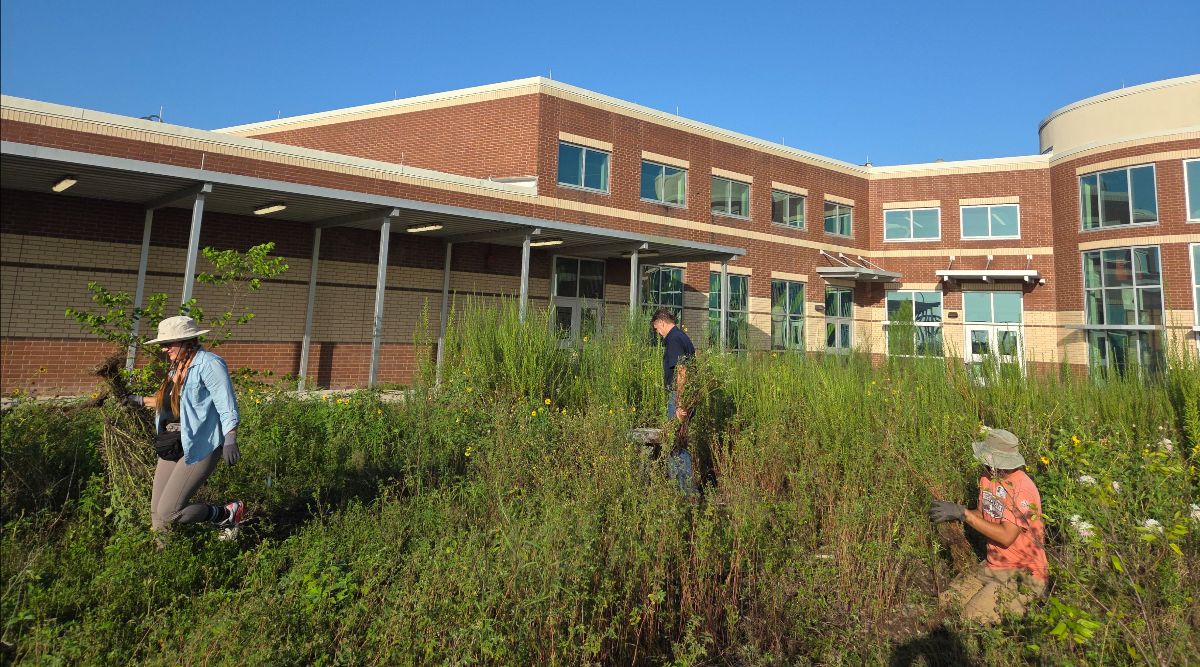
This training ties the concepts included in the newly developed curricula to instream water quality and will allow students to monitor water quality nearby in the Arroyo Colorado.
School staff have proposed an after-school science club, and it is in discussion. The intent of this club is to gather interested students for additional science activities that are difficult to perform during normal class time. These could include a monthly trip to Spotted Sea Trout Park in Rio Hondo to test water quality in the Arroyo Colorado, care and maintain the native landscape/stormwater BMPs on campus, and many other activities. Teachers have been provided with 3 fully stocked Texas Stream Team Core Monitoring kits that can be used in classes and by the proposed science club.
The native landscape and stormwater demonstration site is already having a positive impact on students and the school grounds.
“It’s positive for our campus and we want our children to be one with nature,” Principal Moreno said. “I’d like to see them out here and actively engaged. I want them to know that these plants are native, that they are grown here [in the valley] and they’ll find those here [in the garden].”
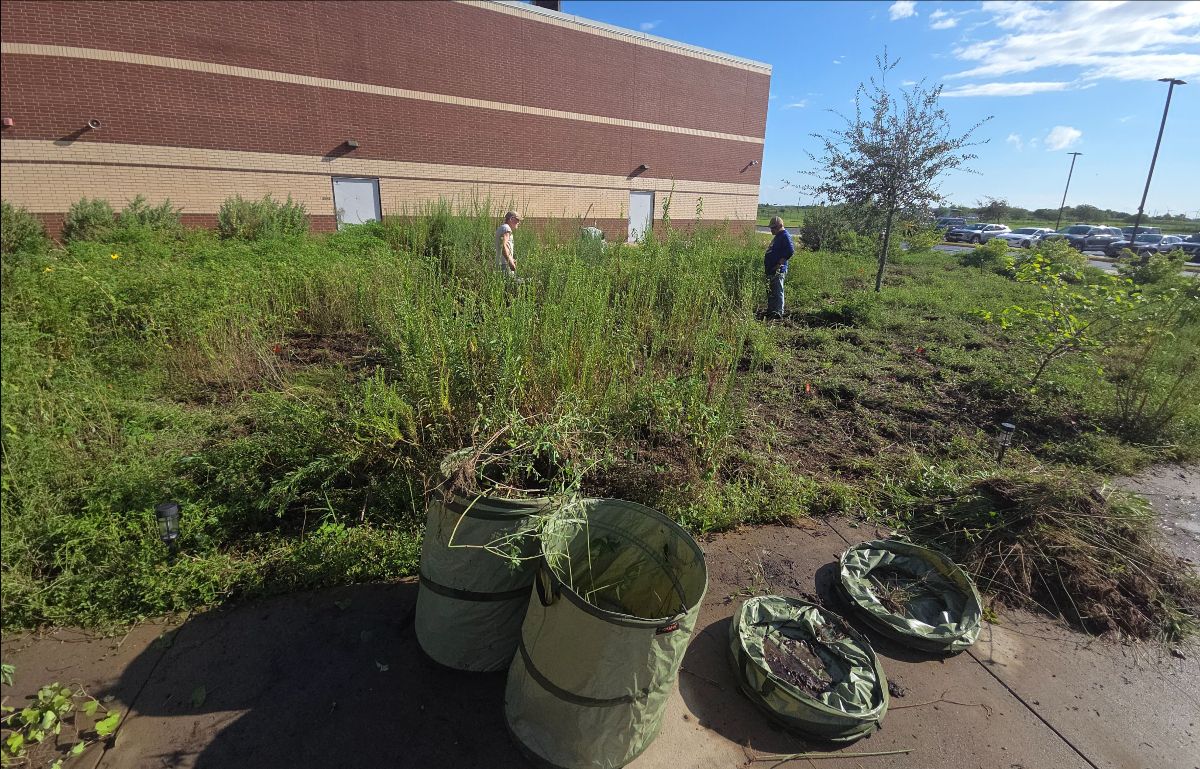
Observations noted by students include nesting killdeer, numerous butterfly and moth species feeding on flowers, hummingbirds commonly feeding on nectar from various flowers, and larger birds searching for seeds or insects.
Many plants are now fully established and are spreading across the landscape, forming a dense ground cover. Frogfruit has done especially well and is forming thick ground cover in many areas. This shields the ground from raindrop impact, slows water flow across the surface, promotes infiltration into the soil, and provides natural filtration of water moving through the landscape.
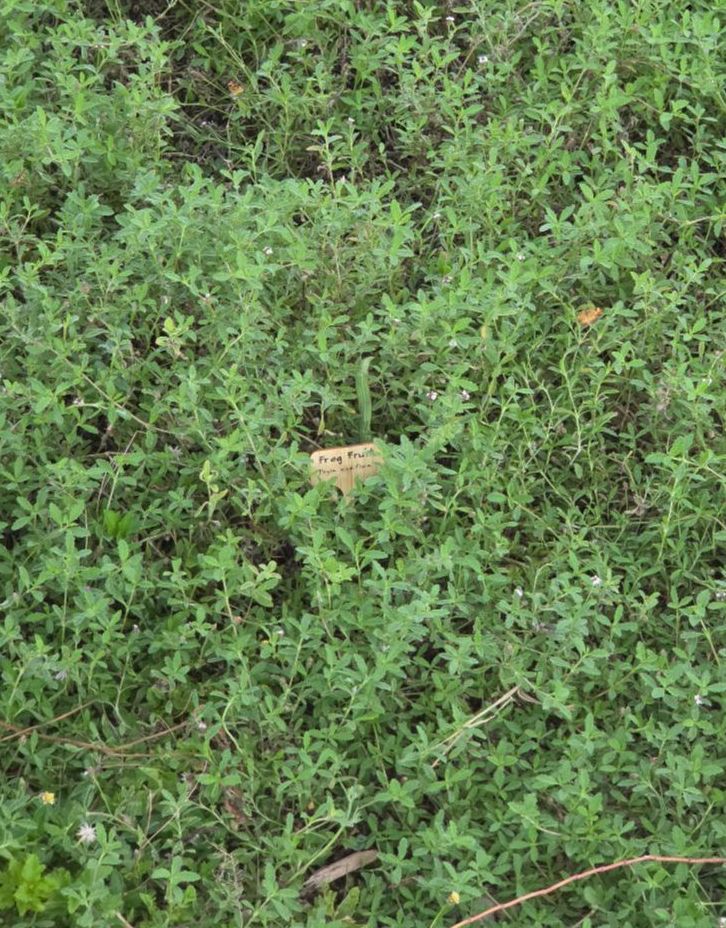
serves as a dense soil cover and food source for
crescent butterfly species. Photo by Samantha Colunga.